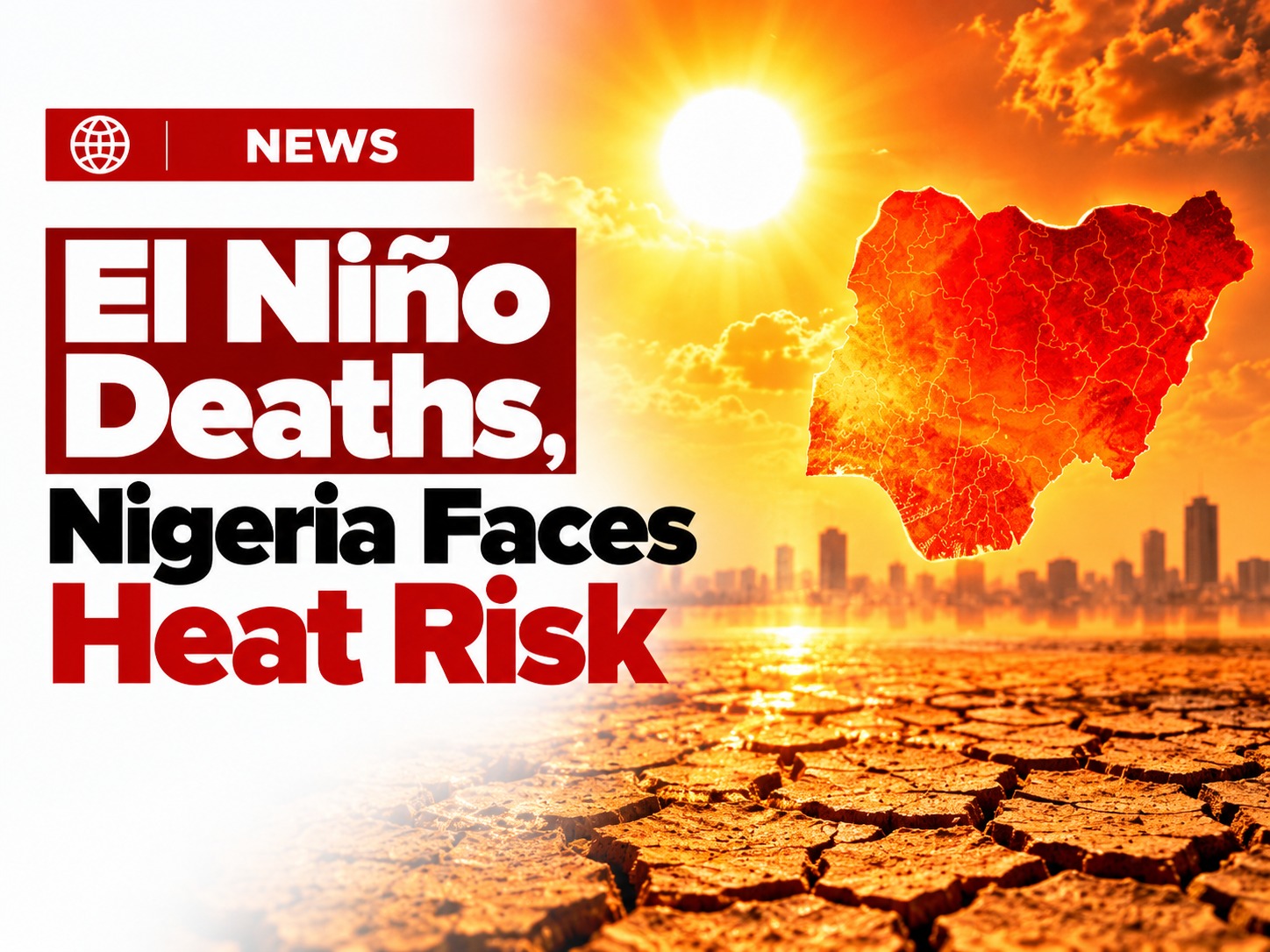
Nigeria could record 31,400 additional heat-related deaths between September 2026 and February 2027 as a strengthening El Niño raises concerns about extreme temperatures, according to a report by the Climate Impact Lab.
The projection places Nigeria among the countries facing the highest estimated heat-related mortality during the period. The researchers also project 451,000 additional heat-related deaths worldwide between June 2026 and February 2027, compared with a normal-year baseline.
The findings have raised concerns about the potential impact of extreme heat on Nigerians, particularly outdoor workers, older people, children and communities with limited access to reliable electricity, clean water and healthcare.
However, the projected figure does not represent confirmed deaths. It estimates the additional deaths that could occur under forecast temperature conditions compared with an average year.

El Niño Raises Concerns Over Heat and Food Security
El Niño is a natural climate phenomenon that occurs when sea surface temperatures in parts of the tropical Pacific Ocean become unusually warm. It can change weather patterns around the world, affecting temperatures and rainfall in different regions.
The World Meteorological Organization has warned that the developing event could remain strong into early 2027, increasing the risk of unusual weather conditions.
In Nigeria, prolonged extreme heat could increase the risk of dehydration, heat exhaustion and other heat-related illnesses. People who work outdoors or lack access to cooling facilities may face greater exposure.
The effects could also extend beyond public health. Changes in rainfall patterns may affect farming, water supplies and electricity demand, placing additional pressure on households already dealing with rising living costs.
However, El Niño does not automatically mean that every part of Nigeria will experience drought, flooding or extreme heat. Local conditions, regional weather patterns and other climate factors will influence the outcome.
Experts Urge Early Action to Protect Vulnerable Nigerians
The Climate Impact Lab’s report highlights the importance of preparing for extreme temperatures before their effects worsen. Recommended measures include heat-warning systems, cooling centres, hydration stations, health outreach and stronger protections for outdoor workers.
Nigerians can also reduce their exposure by drinking water regularly, seeking shade during the hottest hours and limiting strenuous outdoor activities when temperatures are high. Families should pay particular attention to young children, older people and anyone showing signs of heat-related illness.
The Nigerian Meteorological Agency (NiMet) remains an important source of local weather forecasts and advisories as conditions develop.
While the projected death toll is a serious warning, it should not be interpreted as an inevitable outcome. Timely public-health measures, reliable weather information and targeted support for vulnerable communities could help reduce the risks.
As El Niño develops, updated forecasts and effective preparation will be essential to protecting lives and livelihoods across Nigeria.