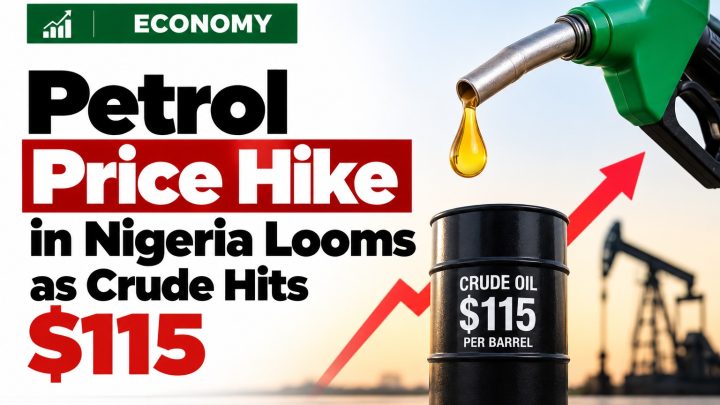
Petrol prices in Nigeria have risen to about ₦1,450 per litre in Abuja and ₦1,400 in Lagos, adding fresh pressure on Nigerian households and businesses as tensions in the Middle East continue to push up global crude oil prices.
The development comes at a time when international oil markets are closely watching the continuing instability in the Middle East, raising concerns that crude prices could climb further.
Petrol Prices in Nigeria Rise in Abuja and Lagos
Checks reported by Nigerian news outlets showed petrol selling for around ₦1,400 to ₦1,450 per litre in parts of Abuja, while prices in Lagos were around ₦1,400 per litre.

The rise in petrol prices in Nigeria has also prompted calls for urgent measures to protect households and businesses from further economic pressure. Higher fuel costs could therefore translate into more expensive goods and services if the situation continues.
The latest development comes as global crude prices respond to heightened geopolitical tensions. Concerns over possible disruptions to oil supplies are also putting pressure on the market.
CPPE Calls for Measures to Protect Nigerians
The Centre for the Promotion of Private Enterprise (CPPE) has called for urgent measures. The group wants to reduce the impact of rising petrol prices on households and businesses.
The group has warned that another increase in fuel costs could place additional pressure on already struggling consumers and businesses. It has advocated targeted relief measures to cushion the effect rather than a return to a broad petrol subsidy.
For Nigerians, the immediate concern is whether the current price increase will continue. If international crude prices remain elevated and the Middle East crisis worsens, petrol prices could face further upward pressure.
The situation remains fluid. Petrol prices in Nigeria could change further as global oil markets respond to developments in the Middle East.