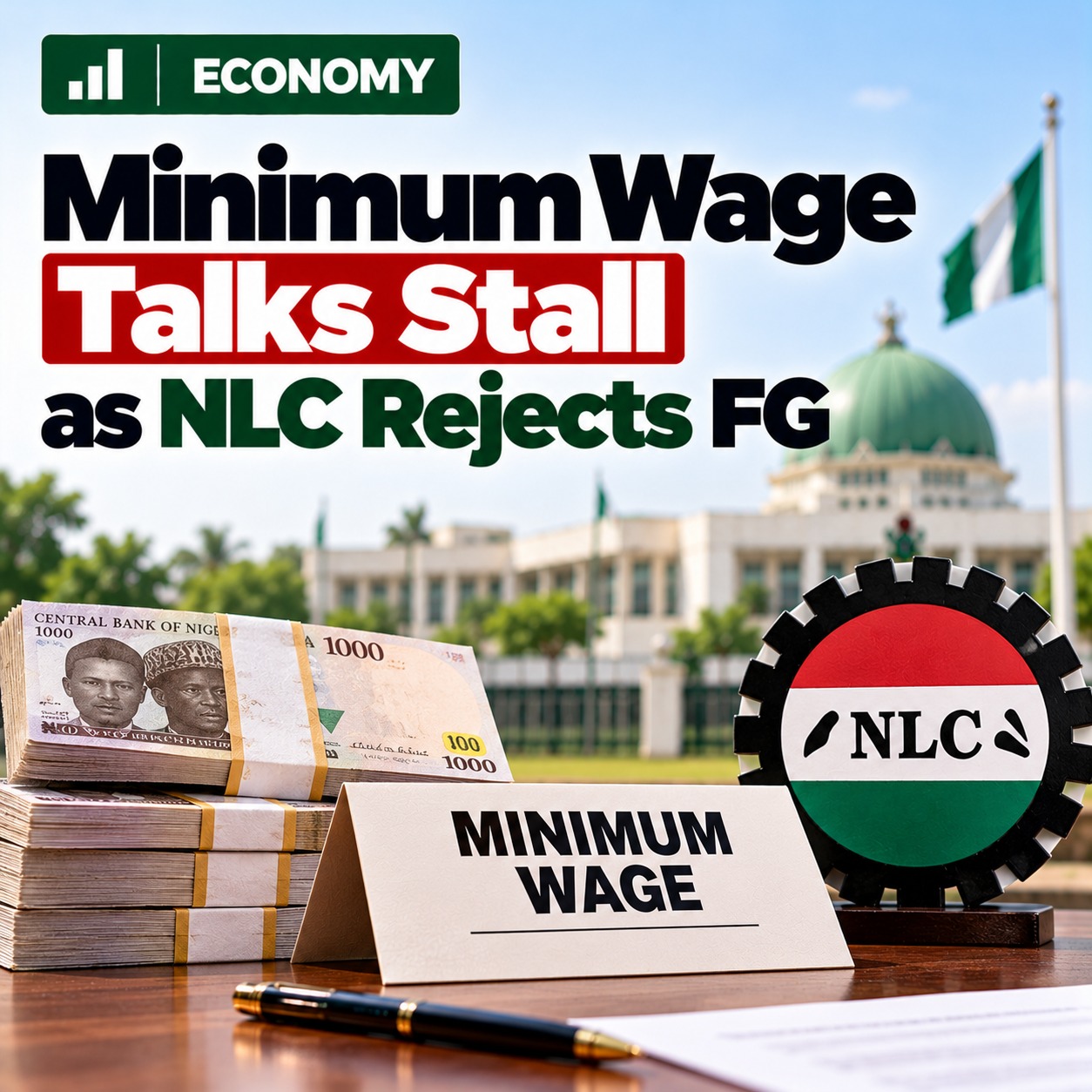
Minimum wage talks in Nigeria have stalled after the Nigeria Labour Congress (NLC) rejected the Federal Government’s response. The disagreement centres on when negotiations for a new national minimum wage should begin. It has raised fresh concerns about workers’ welfare amid rising living costs.
The government maintains that the current ₦70,000 minimum wage is due for review in June 2027. However, the NLC wants preparations to begin much earlier. The union says early negotiations would give both parties enough time to reach an agreement.

Why Minimum Wage Talks Have Stalled
The dispute centres on the timing of negotiations under the National Minimum Wage Act. The government considers an early review premature. It has also highlighted existing economic support programmes designed to ease hardship.
However, the NLC disagrees with this position. The union wants the government to begin preparations immediately. These steps include setting up the tripartite committee responsible for negotiating the next minimum wage.
The congress says early preparations would prevent unnecessary delays. It also wants both parties to discuss workers’ demands before the current wage arrangement reaches its review date.
Importantly, the NLC is not demanding an immediate increase in the minimum wage. Instead, it wants negotiations to begin early. The union believes this would allow sufficient time to agree on a new wage structure.
The disagreement follows the NLC’s rejection of the government’s response to its ultimatum. The union also raised concerns about petrol prices and other economic challenges.
Workers Demand Better Economic Conditions
The NLC wants more than early wage negotiations. It is also demanding measures to reduce the financial pressure on Nigerian workers.
The union has called for lower petrol prices. It argues that expensive fuel increases transport fares and raises the cost of moving goods. These expenses often push food prices higher.
The congress has also demanded tax relief and action on outstanding agreements affecting public-sector workers. It argues that the current minimum wage offers limited relief because essential goods and services remain expensive.
Many workers continue to struggle with the cost of food, rent, transportation and healthcare. As a result, the NLC wants the government to address these concerns alongside wage negotiations.
The disagreement could increase tensions between organised labour and the government. However, the NLC’s rejection of the response does not automatically mean a nationwide strike has begun.
The next steps will depend on the government’s response. Both sides must find common ground on the negotiation timeline and workers’ demands.
For now, Nigerian workers await progress on minimum wage talks and measures to ease the rising cost of living.