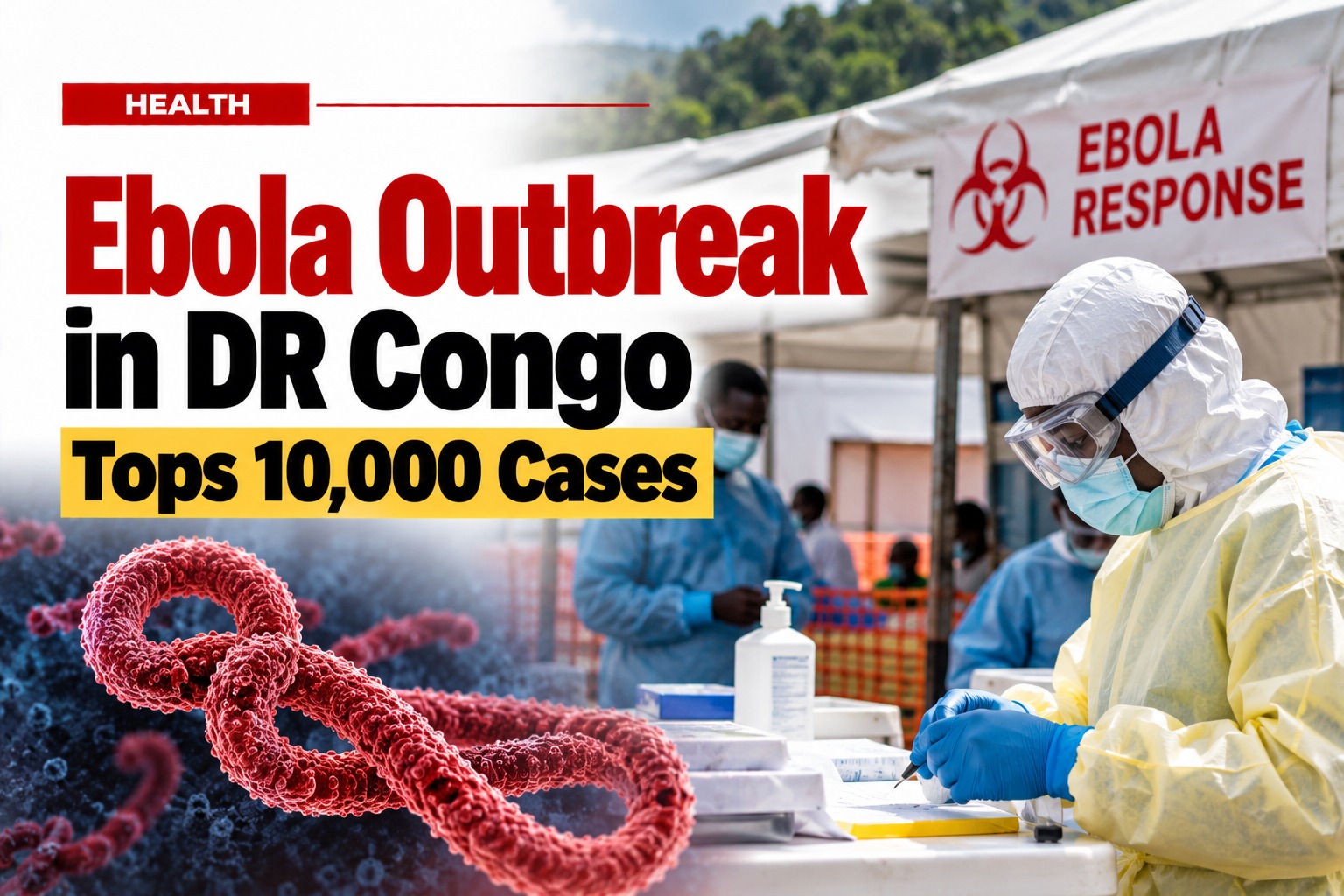
The Ebola outbreak in DR Congo has surpassed 10,000 confirmed cases, with the death toll approaching 5,000. Health authorities are intensifying efforts to contain the Bundibugyo virus as infections spread beyond the country’s borders.
According to the European Centre for Disease Prevention and Control (ECDC), DR Congo recorded 10,193 confirmed cases and 4,960 deaths as of October 27, 2026.
The outbreak has affected eight provinces, with Ituri and North Kivu recording the highest numbers of infections. Health officials continue to report new cases, while response teams face challenges with contact tracing and early detection.
The World Health Organisation (WHO) had earlier reported 9,704 confirmed cases and 4,687 deaths as of October 20. The latest figures show a continued rise in infections and fatalities.

Ebola Outbreak in DR Congo Raises Regional Concerns
The Ebola outbreak has also affected other countries, raising concerns about cross-border transmission.
Kenya has reported nine confirmed cases, including two deaths. All nine cases belong to one connected cluster linked to an infected traveller from DR Congo. Health authorities have continued monitoring contacts to prevent further transmission.
Nigeria also confirmed an imported case in Abuja on October 20. The patient, who had travelled from Uganda, developed symptoms four days after arriving in Nigeria and sought medical attention on October 11.
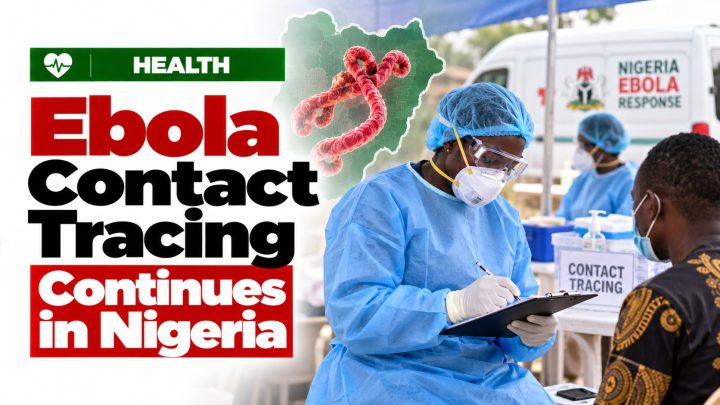
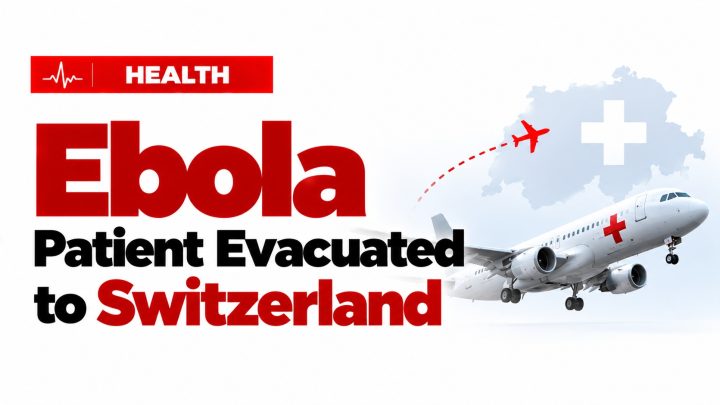
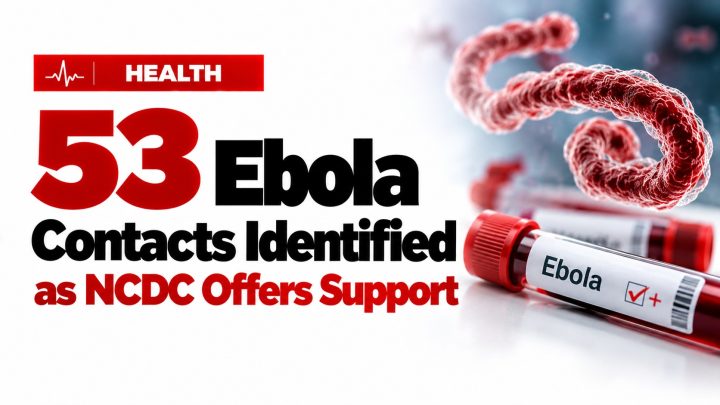
The ECDC reported that Nigerian authorities had identified 62 contacts linked to the case as of October 27. The patient was later evacuated to Switzerland for medical treatment, while her husband, identified as a close contact, entered isolation.
Health Authorities Step Up Response
Health authorities are strengthening surveillance, laboratory testing and contact tracing to limit further infections.
The Africa Centres for Disease Control and Prevention (Africa CDC) has also called for stronger cooperation among African countries. Its Director-General, Jean Kaseya, warned that the continent was not yet winning the fight against the outbreak.
Meanwhile, researchers launched a Phase 2/3 vaccine trial in Bunia, DR Congo, on October 23. The trial aims to assess vaccine candidates against the Bundibugyo virus.
The outbreak remains a major public health concern. With infections continuing to rise, health authorities are urging countries to strengthen preparedness, improve early detection and coordinate their response to prevent further spread.