


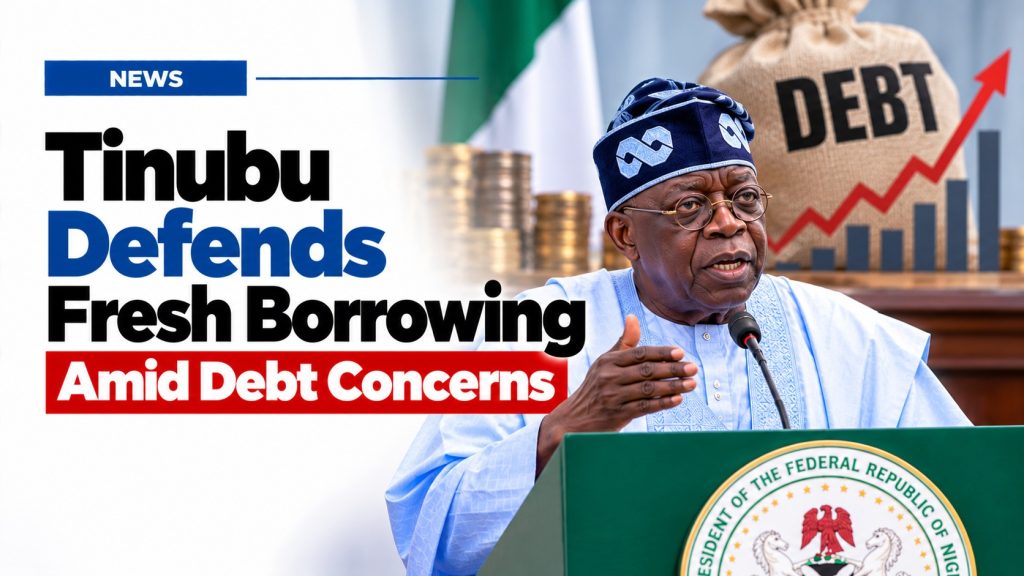
President Bola Tinubu has defended fresh borrowing by the Federal Government. He said Nigeria must focus on what the loans will build. According to him, borrowing should support infrastructure and long-term economic growth.
The President made this known in an essay titled From Reforms to Delivery: Our Infrastructure Investment and Growth Strategy. He published it on Friday, October 30, 2026.
Tinubu argued that borrowing should support productive investments. According to him, the funds should improve roads, electricity, railways and ports. Furthermore, he said these projects could create jobs and support economic growth.
His comments come amid growing concerns about Nigeria’s debt profile. Meanwhile, questions remain about the country’s ability to repay future loans.


Tinubu Defends Fresh Borrowing for Infrastructure
The proposed borrowing programme covers $20.52 billion and €1.045 billion. Together, these facilities form part of the Federal Government’s 2026–2027 external borrowing plan.
Tinubu identified several major projects under the government’s investment strategy. These include the Lagos-Calabar Coastal Highway and Sokoto-Badagry Superhighway. In addition, the Trans-Sahara Superhighway features in the plan.
The programme also covers electricity grid upgrades and improvements to major commercial ports in Lagos.
According to the President, these projects would improve transportation across the country. As a result, better roads and ports could reduce the cost of moving goods. Similarly, reliable electricity could support businesses and industrial activities.
Tinubu also linked the investment programme to his administration’s goal of building a $1 trillion economy by 2030. He maintained that Nigeria needs modern infrastructure to achieve that target.
Debt Concerns and Calls for Accountability
However, the borrowing proposal has attracted criticism from labour groups and opposition figures. They have questioned the need for additional loans despite changes in government revenue.
Similarly, the Nigeria Labour Congress has raised concerns about the country’s growing debt obligations. Critics also want the government to explain how it will manage future repayments.
Tinubu acknowledged the pressure of debt servicing. In his essay, he stated that debt servicing consumed about 65 per cent of government revenue in the first half of 2026.
Consequently, the debate now centres on how effectively the government will use the borrowed funds.
For many Nigerians, the key concern is whether the loans will produce visible results. This includes completed projects, new jobs and better public services.
Ultimately, the success of the borrowing plan will depend on transparency and proper implementation. The government must demonstrate that the loans deliver lasting economic benefits.

