


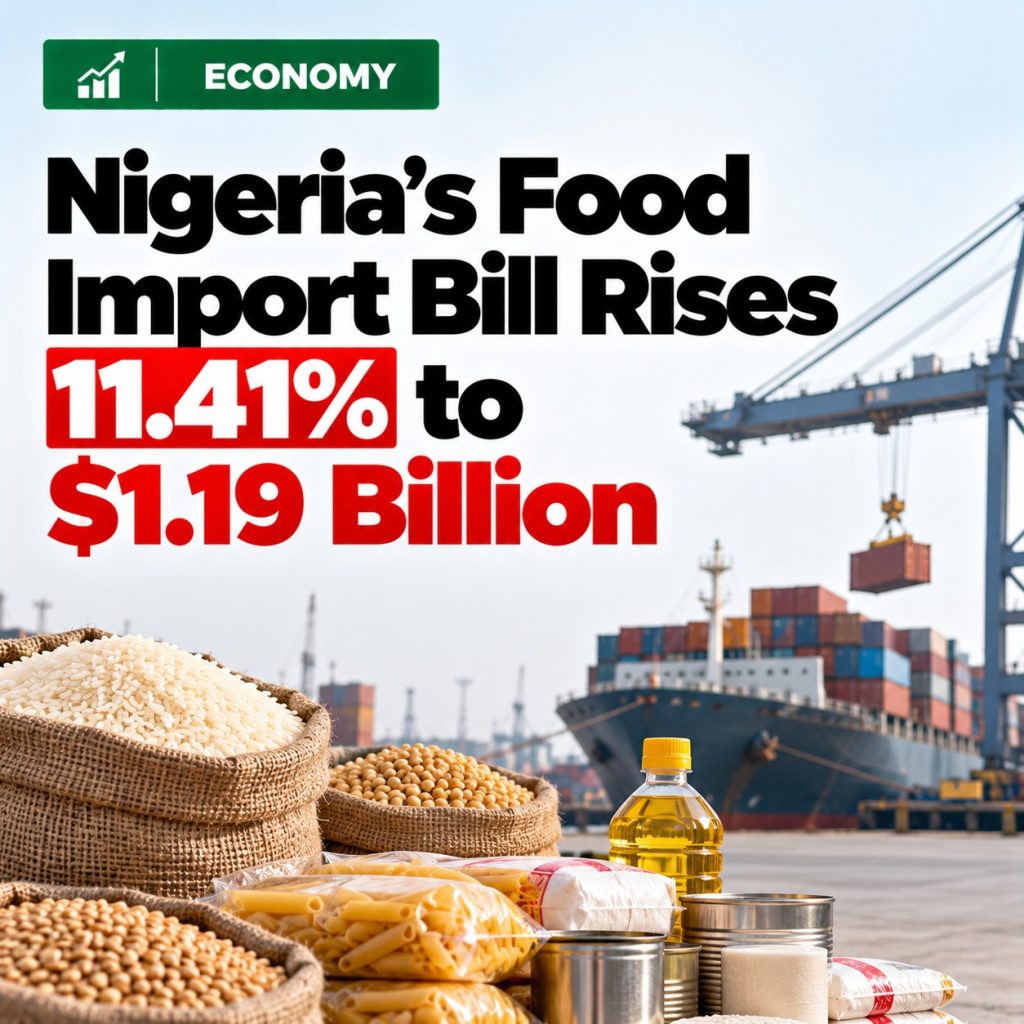
Nigeria’s food import bill rose by 11.41 per cent to $1.19 billion in the first half of 2026. The increase highlights the country’s continued reliance on foreign food supplies. The Guardian reported the figures using data from the Central Bank of Nigeria (CBN).
The rise has raised concerns about food production, foreign exchange demand and food affordability. It also highlights the challenges facing Nigeria’s agricultural sector. The government continues to seek ways to boost local production and reduce dependence on imported food.


Nigeria’s Food Import Bill Raises Food Security Concerns
Nigeria’s food import expenditure followed different trends in the first two quarters of 2026. Spending fell by 2.57 per cent in the first quarter. It dropped from $550.79 million in 2025 to $536.65 million in 2026.
However, the trend changed in the second quarter. Spending increased by 26.38 per cent to approximately $650 million. Nigeria had spent $514.34 million during the same period in 2025.
April recorded a particularly sharp increase. Food import spending rose by 54.28 per cent to $217.74 million. Expenditure also remained high in May and June. It reached $220.26 million and $212 million, respectively.
These figures show how higher spending in the second quarter contributed to the overall increase. They also highlight the growing cost of meeting Nigeria’s food needs through international markets.
Rising Imports Raise Food Security Concerns
Nigeria’s rising food import bill could increase demand for foreign exchange. Importers need foreign currency to pay international suppliers. Exchange rate changes may also affect import costs and domestic prices.
Meanwhile, many households continue to struggle with food affordability. Higher import spending does not automatically mean local production has declined. However, it highlights the need to strengthen domestic food supply.
Farmers need better access to affordable fertilisers, improved seeds and modern equipment. They also need reliable storage facilities and transportation. These improvements could reduce post-harvest losses and increase food availability.
The government must also address insecurity in farming communities. High production costs remain another major challenge. Tackling these problems could help farmers increase their output.
Stronger local agriculture could reduce dependence on imported food. It could also ease foreign exchange demand and improve food security. However, achieving these goals will require sustained investment and effective agricultural policies.
Nigeria’s rising food import bill highlights the need for a stronger domestic food system. Increasing local production could help the country meet its food needs and reduce its reliance on foreign supplies.

