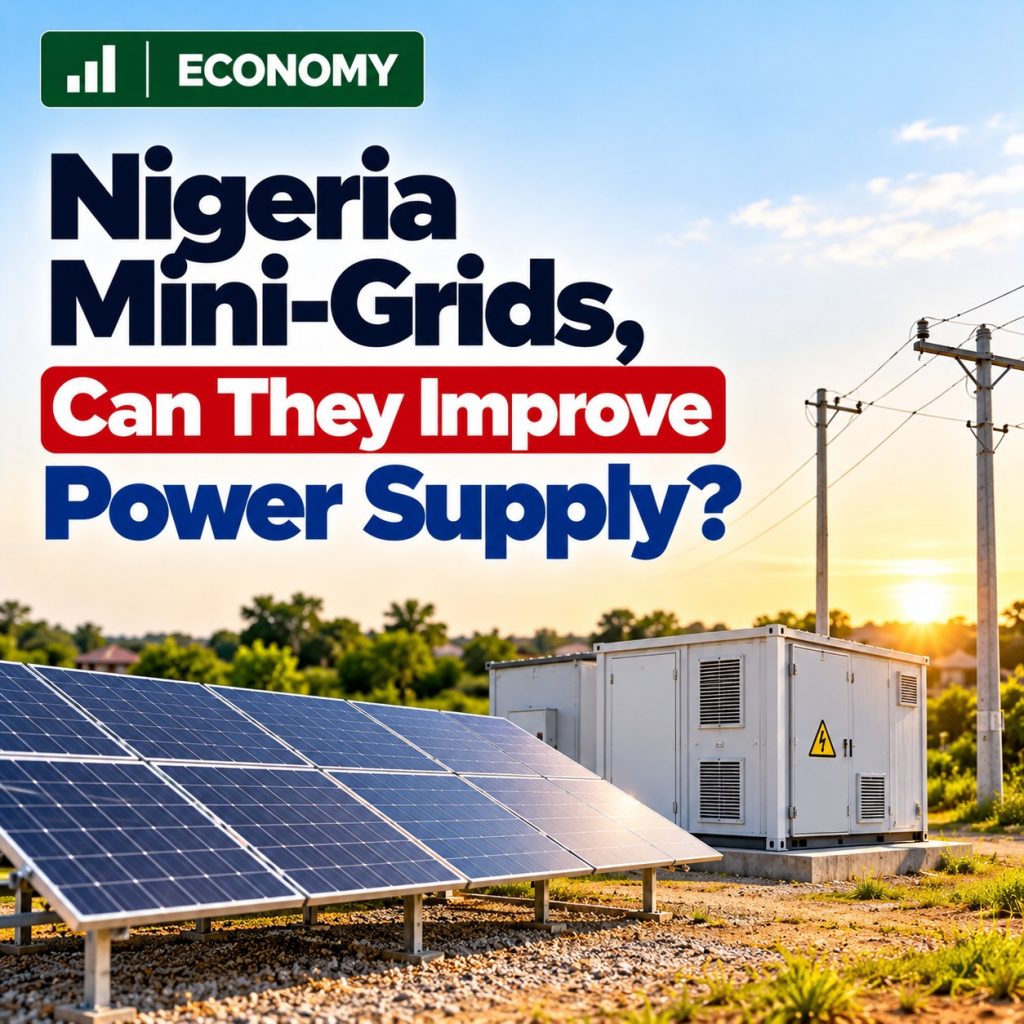
Nigeria mini-grids could help address the country’s persistent electricity challenges by providing more reliable power to underserved communities. Unstable electricity continues to affect households, small businesses and industries, forcing many Nigerians to depend on petrol and diesel generators. These alternatives increase operating costs and make daily activities more expensive.
The Federal Government recently announced a 17.7-megawatt interconnected mini-grid project in Oyo State. The initiative will cover five communities and aims to provide at least 20 hours of electricity daily after completion. The project has renewed interest in decentralised power systems and their potential to address Nigeria’s electricity challenges.


How Nigeria Mini-Grids Work
Nigeria mini-grids are local electricity systems that generate and distribute power to homes, businesses and public facilities within a specific area. They can operate independently or connect to an existing electricity distribution network.
Many mini-grids use solar panels and battery storage to provide electricity. Solar panels generate power during daylight hours, while batteries store excess energy for use when sunlight is unavailable. Other systems may combine renewable energy with different generation technologies.
Unlike individual solar installations, mini-grids can serve entire communities through shared distribution infrastructure. This makes them useful for areas where the national grid provides insufficient or unreliable electricity.
The Oyo project could improve power supply for residents and businesses while reducing their dependence on private generators. However, its actual impact will depend on successful implementation, effective maintenance and affordable electricity tariffs.
Benefits and Challenges of Expanding Access
Reliable electricity can help businesses reduce fuel expenses, extend operating hours and improve productivity. Barbershops, tailoring shops, cold-storage businesses and small manufacturers could benefit from more consistent power. Better electricity access could also support schools, healthcare facilities and other essential services.
Furthermore, mini-grids can complement Nigeria’s national electricity infrastructure by addressing local supply gaps. Expanding these systems could attract investment and create jobs in installation, maintenance and energy services.
However, several challenges could limit their growth. Building mini-grids requires substantial investment in generation equipment, batteries, transformers and distribution lines. Developers must also balance operating costs with tariffs that ordinary Nigerians can afford.
Poor maintenance, limited technical expertise and regulatory complications could also affect long-term performance. Battery replacement and equipment repairs require additional funding, while coordination with existing distribution companies can create operational challenges.
Ultimately, mini-grids could improve electricity access, but they cannot solve every problem in Nigeria’s power sector. The Oyo project will provide an important test of their potential. Its success will depend on whether communities receive reliable electricity at affordable rates, not simply on the amount of power infrastructure installed.