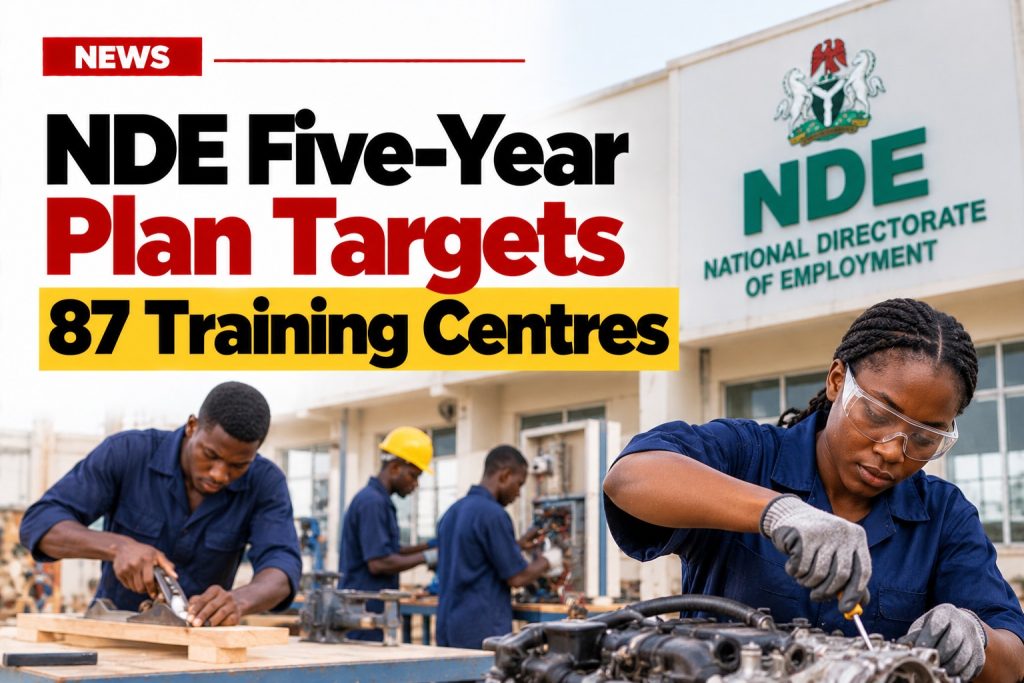
The National Directorate of Employment (NDE) has introduced a five-year strategic plan to improve job creation and strengthen vocational skills development across Nigeria. The initiative will run from 2027 to 2031 and target the modernisation of 87 Skills Training Centres nationwide.
The programme aims to improve access to practical training, support entrepreneurship and connect job seekers with employment opportunities. It will also strengthen labour-market information systems and ensure that vocational programmes meet the changing needs of employers.
NDE Director-General, Silas Agara, announced the plan during its unveiling in Abuja on Thursday, October 29, 2026. He said the strategy would help the agency respond to changing employment demands through coordinated programmes and improved institutional performance.


NDE Five-Year Plan Targets 87 Skills Training Centres
Agara disclosed that the Directorate operates 87 Skills Training Centres, alongside Agricultural Training Centres and Common Facility Centres. However, many of these facilities need rehabilitation, modern equipment and improved training infrastructure.
He said the agency would modernise the centres and harmonise their training curricula. This would establish consistent standards and help participants acquire skills that match industry requirements.
The Director-General also identified the need for stronger partnerships with the Federal Government, development organisations and private businesses. He explained that these partnerships would support the planned improvements and strengthen the quality of vocational training.
Beyond upgrading its facilities, the NDE intends to improve support for people who complete its training programmes. The agency hopes to help more beneficiaries find jobs, establish businesses and earn sustainable incomes.
ILO Backs Stronger Employment Services
The International Labour Organization (ILO) also expressed support for the initiative. Its Country Office Director, Vanessa Phala, highlighted the importance of modern employment services and reliable labour-market information.
She explained that better employment systems could connect job seekers with employers and available opportunities. She also noted that technological changes and emerging industries continue to reshape workforce requirements.
The ILO supported the development of the strategic plan through its collaboration with Germany’s development agency, GIZ, under the SKYE II programme.
Agara stressed that successful implementation would require adequate funding, clear responsibilities and regular monitoring. He also called for measurable targets to track progress throughout the five-year period.
The plan marks another effort to address Nigeria’s employment challenges. However, its success will depend on whether the proposed reforms translate into relevant skills, viable businesses and lasting job opportunities for Nigerians.