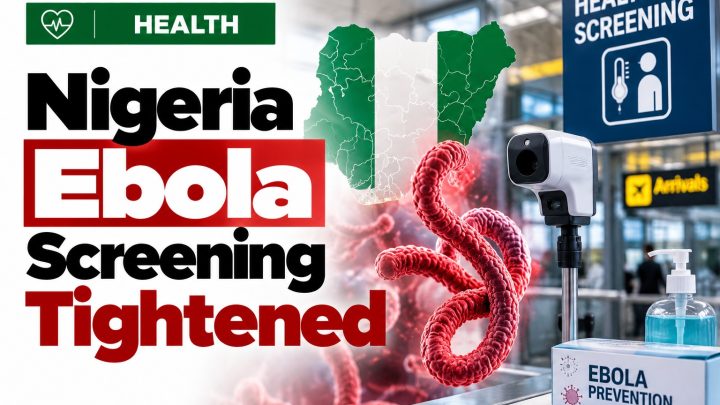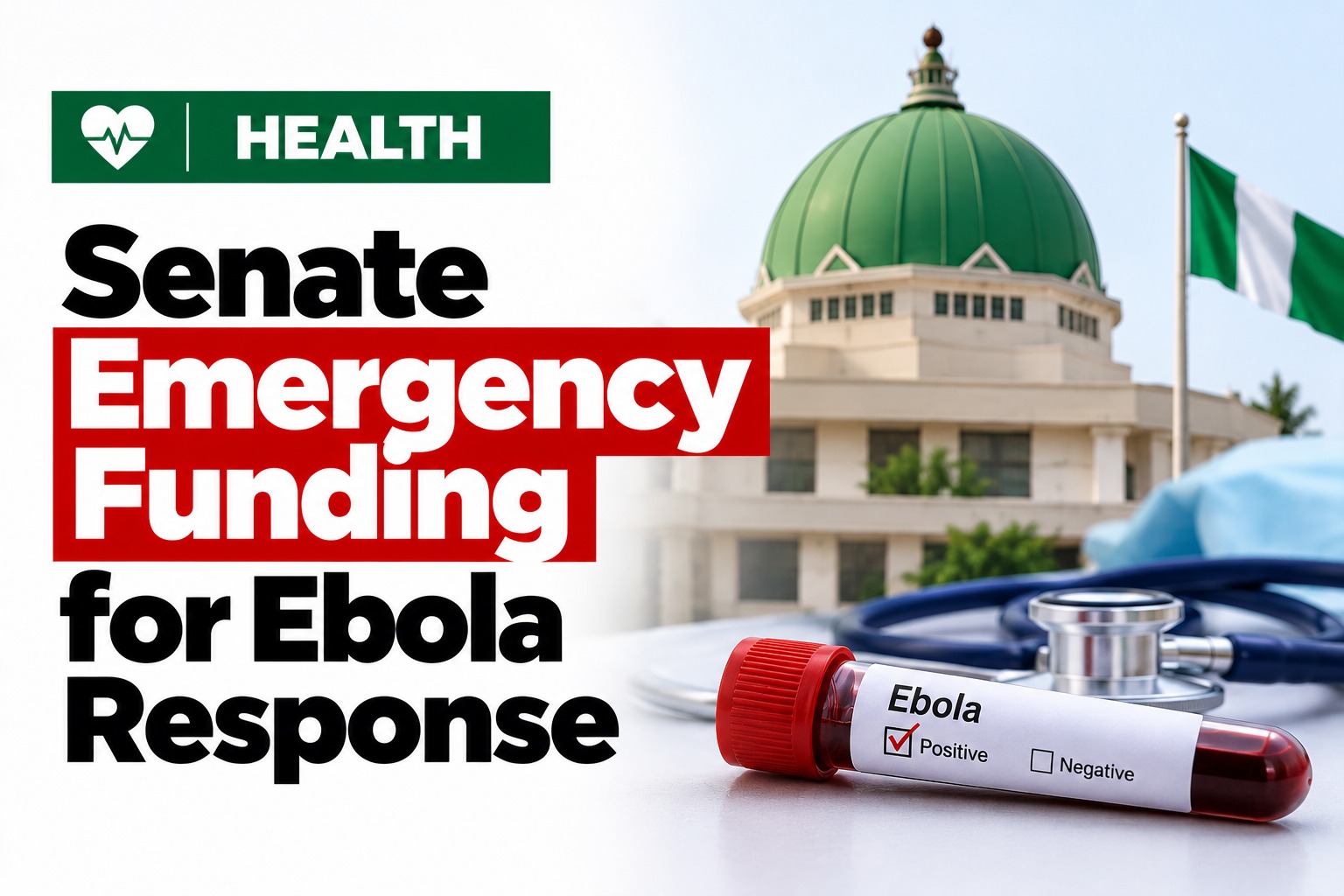
Nigeria’s Senate has called for emergency funding to strengthen the country’s Ebola response. The lawmakers want the Federal Government to release funds immediately. They also seek stricter health screening at airports, seaports and land borders.
The resolution followed a motion of urgent national importance. Senator Francis Faduyile raised concerns about the Bundibugyo strain of Ebola and the risks it poses to Nigeria. The call also followed reports of an imported case in the Federal Capital Territory (FCT).
The Senate wants the government to release funds from the Service-Wide Vote. This would prevent delays caused by future budgetary allocations. The money would support disease surveillance, border screening and emergency preparations.

Senate Emergency Funding and Border Screening
The lawmakers urged the Federal Ministry of Health and Social Welfare to work with the Nigeria Centre for Disease Control and Prevention (NCDC). They also called on Port Health Services to strengthen checks on international arrivals.
Proposed measures include health declaration forms, temperature checks and symptom assessments. The Senate also recommended closer monitoring of travellers who visited affected areas within the previous 21 days.
The chamber called for more trained health officers at entry points. It also wants adequate thermal scanners, protective equipment and isolation facilities. These resources would help officials identify suspected cases quickly.
The Senate further urged the government to strengthen isolation and treatment centres across all 36 states and the FCT. This would improve Nigeria’s ability to respond if more cases emerge.
Lawmakers Warn Against Delays in Ebola Response
The Senate stressed the need for swift action. It warned that poor preparation could weaken efforts to contain the disease.
The lawmakers also raised concerns about limited personnel and equipment at some entry points. They called for the replacement of the Quarantine Act of 1926 with modern public health legislation.
The proposed changes would align Nigeria’s laws with the International Health Regulations of 2005. The Senate also urged relevant ministries to provide adequate funding for the NCDC and Port Health Services in the 2027 budget.
In addition, lawmakers directed relevant committees to engage government agencies on the response. They are expected to report back within four weeks.
Nigeria contained an Ebola outbreak in 2014 through early detection, isolation and contact tracing. That experience highlights the importance of a coordinated response.
The government must now ensure that health agencies have the resources they need. Strong surveillance, effective screening and rapid testing remain essential to limiting further transmission.