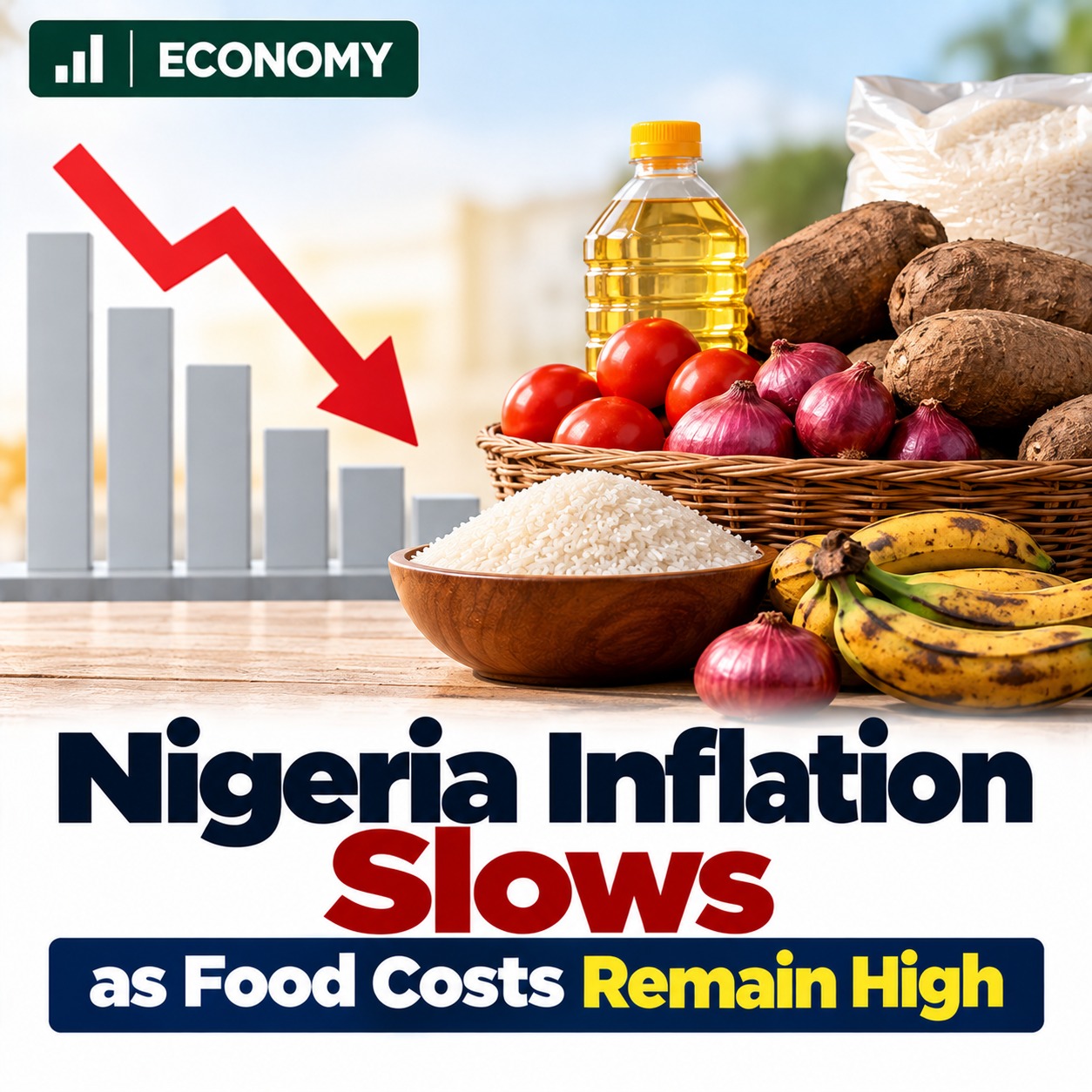
Nigeria inflation slows in September 2026, raising hopes that households may finally get some relief from rising food costs. The latest figures show that price pressures have eased, but many Nigerians still face high costs when buying everyday essentials.
The National Bureau of Statistics (NBS) reported that headline inflation fell to 14.63 per cent in September, down from 15.39 per cent in August. The rate was also lower than the 20.98 per cent recorded in September 2025.
Monthly inflation also dropped to 0.06 per cent from 0.71 per cent in August. This suggests that average consumer prices rose much more slowly during September.
Food inflation provided further signs of relief. Its month-on-month rate fell to -1.55 per cent from 1.02 per cent in August. However, annual food inflation remained at 19.59 per cent, showing that food costs remain significantly higher than a year ago.

Nigeria Inflation Slows, but Will Food Become Cheaper?
A lower inflation rate does not automatically mean cheaper food. Instead, it means prices are rising more slowly than before.
For example, if a bag of rice becomes more expensive over several months, slower inflation does not automatically return it to its previous price. Consumers only experience a direct price reduction when sellers charge less for the same product.
However, September market data from Lagos showed that some food prices actually declined. A Nairametrics survey found that the price of a 50kg bag of maize fell from ₦50,000 in August to ₦40,000 in September. A 50kg bag of yellow garri also dropped from ₦21,000 to ₦18,000.
Not every food item became cheaper. The price of a large bag of egusi rose from ₦370,000 to ₦480,000 during the same period. These figures cover selected Lagos markets and do not represent prices across Nigeria.
What Could Bring More Relief to Households?
Several factors will determine whether consumers benefit from the slowdown. Better harvests and improved food supplies could reduce prices, while lower transport costs may help traders sell goods more cheaply.
However, insecurity in farming communities, distribution expenses and supply disruptions can keep food prices high. Many households also struggle because their incomes have not kept pace with the cost of living.
The September figures offer an encouraging sign that inflationary pressure is easing. Still, the annual food inflation rate shows that affordability remains a major concern.
For Nigerians, lasting relief will depend on sustained price reductions, reliable food supplies and stronger purchasing power. Until these improvements reach markets across the country, slower inflation alone may not make household budgets easier to manage.